
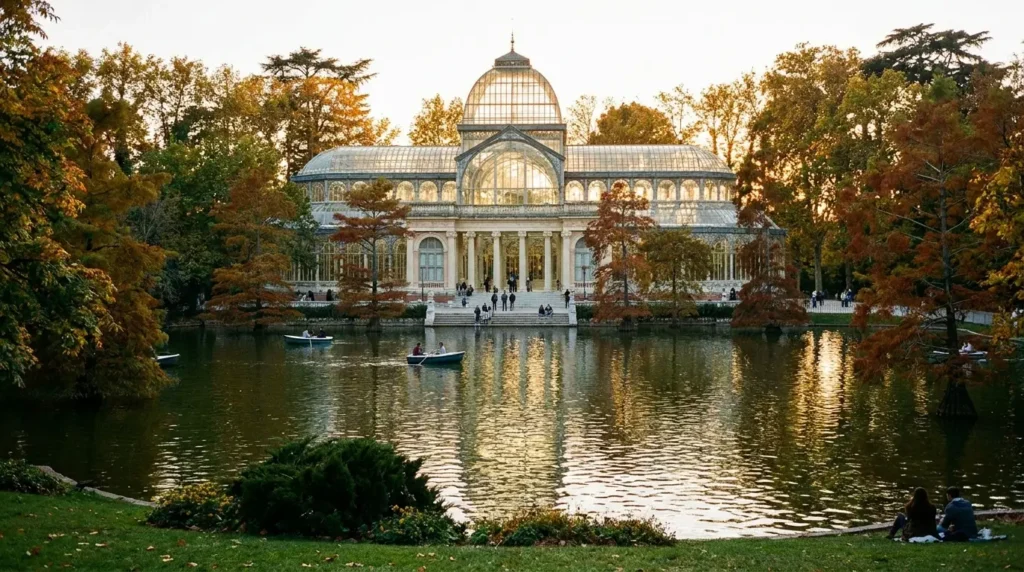
Seeing Madrid in two days allows you to discover many of its must-see sights if you organize your itinerary by area. The first day can be dedicated to the historic center, Plaza Mayor, the Royal Palace, and Gran Vía. The second day, to... Prado Museum, the Literary Quarter, Cibeles, the Puerta de Alcalá and the Retiro Park.
Madrid cannot be fully explored in 48 hours, but two well-organized days are enough to get a first glimpse of its history, heritage, art, and urban life.
On the other hand, the key is not to try to visit every single monument. In fact, a balanced itinerary should combine exterior tours, a significant interior visit, breaks for meals, and time for walking without turning the trip into a race.
Furthermore, the official tourism website itself suggests combining art, gastronomy, shopping, and urban life during a 48-hour stay. On this route, we've prioritized the most representative places for a first visit and grouped them by proximity.
A brief itinerary of Madrid in two days
Day 1: Historic center and monumental Madrid
1. Puerta del Sol.
2. Plaza Mayor.
4. Plaza de la Villa.
5. Almudena Cathedral.
6. Royal Palace.
7. Plaza de Oriente.
8. Gran Vía.
9. Plaza de España or Temple of Debod.
Day 2: Art, Literature and Retreat
1. Prado Museum.
2. Paseo del Prado.
3. Literary Quarter.
4. Santa Ana Square.
5. Cibeles Fountain.
6. Puerta de Alcalá.
7. Retiro Park.
8. Crystal Palace and Great Pond.
This itinerary works especially well for those staying in the city centre or near a well-connected metro station.
Day 1: Historic center, Royal Palace and Gran Vía
9:00 — Puerta del Sol
In fact, Puerta del Sol is a good starting point due to its location and transport connections.
Before continuing towards historic Madrid, it is advisable to locate:
- The Royal Post Office.
- The clock that chimes.
- The Kilometer Zero plaque.
- The statue of the bear and the strawberry tree.
- The equestrian statue of Charles III.
It's not necessary to stay too long. Fifteen to twenty minutes is enough time to recognize the main features and get your bearings in the center of Madrid.
On the other hand, from Sol you can proceed towards Plaza Mayor via Calle Mayor or Calle de Postas.
9:30 — Plaza Mayor
Likewise, the Plaza Mayor is one of the key stops on the first day.
It is worth noting here:
- The Bakery House.
- The statue of Philip III.
- The arcades.
- The entrances to the square.
- The Arch of Cutlers.
- The difference in level with respect to the lower streets.
Besides its monumental value, the square helps to understand how Madrid was transformed during the Habsburg period.
Spending between twenty and thirty minutes is usually enough to explore it without limiting the stop to a quick photograph.
10:15 — Arco de Cuchilleros and Mercado de San Miguel
From the Plaza Mayor you can go down through the Arco de Cuchilleros to observe the difference in height between the square and the nearby streets.
Afterwards, the route continues towards the San Miguel Market.
Furthermore, it currently functions primarily as a food market and is usually very popular with visitors. It can also be a convenient place to stop for a bite to eat, but a full meal isn't essential.
On the other hand, a brief visit allows you to observe its structure and continue towards the Plaza de la Villa.
10:45 — Plaza de la Villa
The Plaza de la Villa is one of the most interesting historical sites in the city center.
It includes:
- The House and Tower of the Lujanes.
- The House of Cisneros.
- The old Town Hall.
Furthermore, the square allows one to observe different stages of Madrid's architecture in a small space.
It is also worth remembering that Habsburg Madrid developed on a medieval town that already had streets, buildings, and centers of power.
11:15 — Main Street
Likewise, Calle Mayor connects the commercial area of Plaza Mayor with the old political and courtly area.
More than just an isolated stop, it functions as the axis that leads to the Almudena Cathedral and the Royal Palace.
In addition, it is worth noting the following during the tour:
- Side streets.
- Passageways.
- Shields.
- Balconies.
- Religious buildings.
- Changes in width and layout.
Walking while only looking towards the end causes many details to go unnoticed.
11:45 — Almudena Cathedral
In fact, the Cathedral of Santa María la Real de la Almudena is located opposite the Royal Palace.
Similarly, you can take an exterior visit or briefly enter the temple, depending on the time available.
Furthermore, entry to the museum and access to the dome require additional planning. Before visiting, you should check the current opening hours and conditions on the Cathedral's official website.
For a two-day tour, the interior visit can be kept brief if the Royal Palace has been booked later.
12:15 — Royal Palace
Likewise, one of the main decisions regarding the itinerary must be made here:
- Visit only the exterior.
- Go in and spend approximately one and a half or two hours.
- Book a guided tour.
Furthermore, the Royal Palace has more than 3,000 rooms and houses works and collections linked to the Spanish monarchy. National Heritage recommends buying tickets online because capacity is limited and availability at the box office may be reduced.National Heritage)
If you go in, it is advisable to reserve a specific time slot and rearrange your meal depending on the visit.
What to see from the outside
- The Armory Square.
- The main facade.
- The relationship with the Almudena Cathedral.
- The views towards the Casa de Campo.
- The surroundings of the Royal Collections Gallery.
- The connection with the Plaza de Oriente.
What to keep in mind if you visit the interior
- Buy your ticket in advance.
- Arrive with plenty of room to spare.
- Check the indicated access.
- Don't schedule another reservation too soon.
- Check for possible closures due to official events.
- Check the updated information on National Heritage.
2:00 PM — Lunch in the Opera House area
The Opera area, Santiago Street and the streets near the Plaza de Oriente offer different options for eating.
Booking can be useful during weekends, holidays, or periods of high demand.
It is advisable to avoid an excessively long meal if you want to complete Gran Vía and reach the Temple of Debod before the end of the afternoon.
3:30 p.m. — Plaza de Oriente and Teatro Real
In fact, the Plaza de Oriente offers a wide perspective of the Royal Palace.
On the other hand, in the center is the monument to Philip IV and, opposite the palace, the Royal Theatre.
This area allows you to rest after the interior visit and then continue towards:
- Isabel II Square.
- Arenal Street.
- Callao.
- Gran Vía.
If the group is tired, the Opera station allows you to shorten the journey or travel by metro.
16:15 — Gran Vía
On the other hand, Gran Vía presents a very different image from the historic Madrid seen during the morning.
Furthermore, the avenue was developed during the 20th century and includes:
- Monumental buildings.
- Old cinemas.
- Theaters.
- Shops.
- Hotels.
- Rooftops.
- Leisure spaces.
For a first visit, you can explore the section between Callao and Plaza de España or, in the opposite direction, from Callao towards the Metropolis building.
Furthermore, it is not necessary to enter all the shops or walk the entire length of the avenue.
5:30 p.m. — Plaza de España
In fact, Plaza de España connects Gran Vía with the area around the Royal Palace and the Temple of Debod.
On the other hand, one can see the monument dedicated to Miguel de Cervantes, accompanied by the figures of Don Quixote and Sancho Panza.
It's a good place to pause before deciding whether to continue on to the Temple of Debod.
18:15 — Temple of Debod
The Temple of Debod is a good option to end the first day, especially if the schedule allows you to watch the sunset.
Furthermore, the number of visitors can be high, and the opening hours for the interior do not always coincide with those of the exterior space.
Furthermore, the visit shouldn't depend solely on entering the monument. The surrounding area also offers views towards the Casa de Campo park and western Madrid.
On very hot days, it is advisable to postpone this stop until the temperature drops.
Day 2: Prado Museum, Literary Quarter and Retiro Park
The second day combines art, literature, monumental architecture and green spaces.
To maintain a reasonable pace, it is advisable to book the Prado Museum first thing in the morning and avoid adding another major museum during the same day.
9:30 — Arrival at the Prado Museum
It is recommended to arrive between fifteen and twenty minutes before the reserved time.
In fact, that time may be needed for:
- Find the access.
- Go through security.
- Validate the inputs.
- Save items, when appropriate.
- Meet with the guide.
- Consult the map.
10:00 — Prado Museum
For a first visit, it is advisable to dedicate between two and three hours.
Trying to see the entire collection is tiring and makes it difficult to remember the works. It's also preferable to select a route with between eight and fifteen key paintings.
Furthermore, among the most representative artists are:
- Velázquez.
- Goya.
- Bosch.
- Rubens.
- Titian.
- El Greco.
- Zurbarán.
- Murillo.
Likewise, admission to the Prado includes the permanent collection and any available temporary exhibitions, and access is granted via a timed pass. The museum is currently open Monday to Saturday from 10:00 to 20:00 and Sundays and public holidays from 10:00 to 19:00, although this information should be double-checked before posting or traveling.Prado Museum)
Which projects can be prioritized?
- *Las meninas*, by Velázquez.
- *The Garden of Earthly Delights*, by Hieronymus Bosch.
- *May 3, 1808*, by Goya.
- *The Family of Charles IV*, by Goya.
- *The gentleman with his hand on his chest*, by El Greco.
- *The Descent from the Cross*, by Rogier van der Weyden.
Furthermore, the final selection may change due to reorganizations, loans, or room closures.
Is it worth visiting the Prado with a guide?
It may be especially worthwhile when:
- It's the first visit.
- There is little time available.
- No prior knowledge of art is required.
- The aim is to understand the context of the works.
- Traveling with children.
- A specific selection is being sought.
- We would like to ask questions.
In fact, a guided tour should not try to show more paintings, but rather help to observe and relate them.
12:30 — Paseo del Prado and Neptune Fountain
Upon leaving the museum, you can briefly stroll along the Paseo del Prado.
The area is part of the Landscape of Light, which includes the Paseo del Prado and the Retiro Park and was recognized by UNESCO as a cultural landscape in 2021.EsMadrid)
On the other hand, from the museum you can proceed towards:
- Neptune Fountain.
- Plaza de Cánovas del Castillo.
- Thyssen-Bornemisza Museum.
- Literary Quarter.
It is not advisable to also enter the Thyssen during this route, unless art is the absolute priority of the trip.
13:00 — Literary Quarter
On the other hand, the Literary Quarter is characterized by its pedestrian streets, squares, theaters and references to writers such as Cervantes, Lope de Vega, Quevedo and Góngora.
Madrid Tourism places its main access points around Antón Martín, Estación del Arte and Sol, making it easy to combine with the Prado Museum and the city center.EsMadrid)
A short route might also include:
- Calle de las Huertas.
- Lion Street.
- Lope de Vega House Museum.
- Convent of the Trinitarians.
- Santa Ana Square.
- Spanish Theatre.
- Ateneo de Madrid.
Furthermore, a full literary tour is not necessary. In fact, a first impression of the neighborhood can be obtained in between forty-five minutes and an hour.
2:00 PM — Lunch in the Literary Quarter
The streets near Huertas, León, Moratín and the Plaza de Santa Ana offer numerous options.
In addition, it's advisable to compare menus and not choose solely because you're in a busy square.
A meal of approximately one and a half hours allows you to rest after the museum and regain energy before continuing towards Cibeles and Retiro.
15:45 — Cibeles Fountain
On the other hand, from the Literary Quarter you can walk towards Cibeles Square.
- It includes:
- The Cibeles Fountain.
- He Cibeles Palace.
- The Bank of Spain.
- The Linares Palace.
- The beginning of Alcalá Street.
The fountain is also one of Madrid's great symbols and marks the beginning of the so-called Art Walk.EsMadrid)
The square has a lot of traffic, so it should be viewed from designated areas and pedestrian crossings should always be used.
16:15 — Puerta de Alcalá
Furthermore, from Cibeles you can continue along Alcalá Street to the Puerta de Alcalá.
It is worth observing its two facades, which present differences.
The stop may be brief, as the main objective is to connect with the Retiro Park.
16:45 — Retiro Park
El Retiro offers a more peaceful end to two days of urban exploration.
In fact, it's not necessary to visit the entire park. A reasonable route might include:
1. Entrance through the Puerta de Alcalá.
2. Large Pond.
3. Monument to Alfonso XII.
4. Crystal Palace.
5. Nearby walks.
6. Exit towards the Paseo del Prado or Atocha station.
Furthermore, the area encompassing the Paseo del Prado and the Retiro Park forms part of the cultural landscape recognized by UNESCO.EsMadrid)
Spending between one and a half and two hours allows you to walk at a leisurely pace and rest.
19:00 — End of the tour
The route may end:
- In the Retiro Park itself.
- Near Atocha station.
- In the Literary Quarter.
- On the Paseo del Prado.
- In the Ibiza area, if you want to have dinner nearby.
What should be booked in advance?
Royal Palace
Patrimonio Nacional recommends advance purchase because capacity is limited and box office sales may be reduced. Partial closures may also occur due to official events.National Heritage)
Prado Museum
Likewise, the ticket is purchased for a specific date and time slot. Therefore, current rates and conditions should be checked on the official website.Prado Museum)
Restaurants
It's not always essential, but booking can be helpful:
- On weekends.
- During holidays.
- During peak season.
- For groups.
- When you want to eat at a specific time.
Guided tours
Private tours depend on the guide's availability and should be requested in advance, especially if needed:
- Another language.
- Adaptation for children.
- A specific schedule.
- Pick-up at a designated point.
- A personalized tour.
What to eliminate if you prefer to travel at a more relaxed pace
In fact, the itinerary can be simplified.
First day, more relaxed
Remove the Temple of Debod and end at Plaza de España or Gran Vía.
Second day, more relaxed
Reduce the Literary Quarter to Calle de las Huertas and Plaza de Santa Ana.
If you visit the Royal Palace inside
On the other hand, don't add another large monument on the same day.
If the Prado is your priority
Spend three hours on it and eliminate Cibeles or part of the Literary Quarter.
If you are traveling with children
Reduce the number of stops and incorporate more time in Retiro Park or Plaza de Oriente.
How to adapt the route according to the type of traveler
Madrid in two days with children
It is advisable:
- Reduce the size of the Prado Museum.
- Avoid excessively long explanations.
- Add observation games.
- Book more time at the Retiro.
- Introduce pauses.
- Avoid working more than eight hours a day.
On the other hand, a private family visit allows for adapting the pace and language.
Madrid in two days for seniors
This may be useful:
- Use the subway or taxi between some areas.
- Remove the Temple of Debod.
- Reduce Gran Vía.
- Take breaks in Plaza de Oriente.
- Avoid walking all the way through Retiro Park.
- Communicate mobility needs in advance.
Madrid in two days for art lovers
In addition, part of the historical tour can be replaced by:
- Thyssen-Bornemisza Museum.
- Reina Sofía Museum.
- Gallery of the Royal Collections.
- A more extensive visit to the Prado.
In fact, it is not advisable to try to get to know the three great museums in depth in just two days.
Madrid in two days for history lovers
It is advisable to prioritize:
- Madrid of the Habsburgs.
- Plaza de la Villa.
- Royal Palace.
- Literary Quarter.
- Historical guided tour.
- Gallery of the Royal Collections.
How to get around during these two days
On the other hand, most of the route can be done on foot.
However, public transport can be useful for:
- Return to accommodation.
- Connect Plaza de España with another area.
- Arrive at the Prado in the morning.
- Avoid walking during the hottest hours.
- Adapt the route to mobility problems.
It is not advisable to use the metro for very short journeys within the city center, because part of the interest lies in observing how the streets and squares are connected.
Furthermore, the official tourist guide for Madrid offers updated maps and resources for planning your journeys.
Common mistakes when visiting Madrid in two days
Try to see everything
Two days allow you to see the essentials, not to see the entire city.
Booking too many indoor tours
Access, controls and movement take more time than expected.
Organize each day in remote areas
Grouping places by proximity reduces unnecessary travel.
Not leaving time to eat
Likewise, a route without breaks becomes exhausting and makes it difficult to enjoy the last stops.
Do not check schedules
Museums, monuments and gardens may change their conditions.
Schedule the Prado after a very long route
The visit requires attention and is more beneficial when done with energy.
Not adapting the itinerary to the weather
Furthermore, long journeys should be avoided during the middle of the day in summer. In fact, it's advisable to check what time it gets dark in winter.
Wearing inappropriate footwear
The route involves many hours of walking, even using public transport.
Is it worth booking a guided tour?
A guided tour can be especially useful when you only have two days.
Allows:
- To better understand the historic center.
- Avoid scattered investigations.
- Identify which places are worth visiting inside.
- Organize a coherent route.
- Distinguish historical facts from legends.
- Take advantage of a limited time frame.
- Ask questions.
- Adapt the content to the group.
On the other hand, a shared tour can work for a first introduction.
A private tour can be more convenient when needed:
- Adjust the schedule.
- Reduce distances.
- Traveling with children or elderly people.
- End up near another reserve.
- Prioritize certain topics.
- Adapt the pace.
- Organize a very short stay.
Discover Madrid with 4U Madrid
Two days allow you to see the main sights of Madrid, but the experience changes when you understand the relationship between its squares, monuments, writers and urban transformations.
Furthermore, at 4U Madrid we offer different ways to explore the city, from shared tours to private experiences tailored to the time and interests of each group.
You can take a historical tour on the first day and complete your stay with a cultural visit or a personalized tour.
Frequently asked questions about Madrid in two days
How to divide the two days
Two days allow you to visit the historic center, the Royal Palace, Gran Vía, the Prado Museum, the Literary Quarter, Cibeles, and Retiro Park. While this isn't enough time to see all the neighborhoods and museums, it's sufficient to get a fairly comprehensive first impression.
The priority stops are Puerta del Sol, Plaza Mayor, Royal Palace, Gran Vía, Prado Museum, Cibeles, Puerta de Alcalá, and Retiro Park. In particular, the selection should be narrowed down if you plan to visit several indoor sites.
Both offer different experiences. The Royal Palace allows you to explore ceremonial spaces and learn about the history of the monarchy. The Prado focuses on the great masters of European painting. It's possible to visit both in two days if you book one for each morning.
Transportation, tickets and meals
Most of it is possible, although it involves many hours of walking. The metro, bus, or taxi can be used to return to the accommodation or to shorten some sections depending on the weather and the group's mobility.
The Sol, Gran Vía, Ópera, Barrio de las Letras, Atocha, and Retiro areas offer easy access to much of the itinerary. The best choice will depend on your budget, the desired atmosphere, and the connection to the airport or train station.
This can be worthwhile when you want to make better use of your time, adapt your route, travel as a family, or end up near a specific reserve. It also allows you to concentrate the historical explanation on one part of the trip and explore the rest on your own.
