
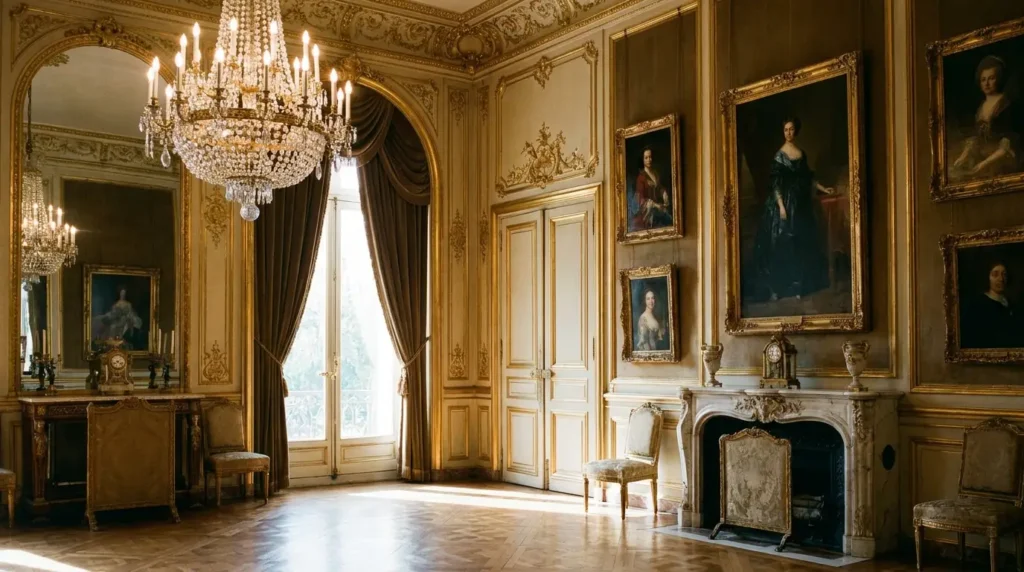
Madrid has dozens of museums beyond the Prado, the Reina Sofía, and the Thyssen. Among the best alternatives are the Cerralbo Museum, The Museum of Romanticism, the Museum of the History of Madrid, the San Isidro Museum, the Lázaro Galdiano Museum, the National Museum of Decorative Arts, and the Lope de Vega House Museum. Many can be visited in less than two hours, and some are free.
On the other hand, the great museums of the Art Walk are essential for many people, but they do not always offer the experience that each traveler seeks.
Some prefer smaller spaces, manageable collections, historic houses, or museums focused on specific themes. Others are visitors who are already familiar with the major art galleries and want to discover a less obvious side of Madrid.
In addition, lesser-known museums offer the opportunity to explore:
- Aristocratic life in the 19th century.
- Medieval Madrid.
- The everyday history of the city.
- Furniture and decorative arts.
- The evolution of clothing.
- The literature of the Golden Age.
- Private collecting.
- Geology and paleontology.
- The domestic story.
- The urban changes of Madrid.
Furthermore, the advantage is that many can be visited in an hour or an hour and a half, without dedicating the entire day to a single building.
What does it mean for a museum to be "less well known"?
It does not necessarily mean that it is small, free, or unimportant.
In fact, this article considers less well-known museums that:
- They receive less tourist attention than the great art galleries.
- They don't usually appear among the first recommendations for a short visit.
- They maintain specialized collections.
- They occupy homes, palaces, or historic buildings.
- They allow us to understand specific aspects of Madrid.
- They can easily be incorporated into a route through a neighborhood.
Madrid Tourism It dedicates specific selections to house museums and those smaller spaces that preserve collections and historical environments away from the main circuit of the Art Walk.
1. Cerralbo Museum
On the other hand, the Cerralbo Museum is one of the best options for those who want to visit a Madrid palace preserved with much of its decoration and collections.
It was the residence of the 17th Marquis of Cerralbo and his family between the late 19th and early 20th centuries. The tour offers a glimpse into the life of an aristocratic family and how the various spaces for official functions, receptions, and private life were used.
What can you see
The collection includes:
- Paint.
- Sculpture.
- Arms.
- Armor.
- Porcelain.
- Furniture.
- Lamps.
- Mirrors.
- Textiles.
- Archaeological objects.
- Watches.
- Coins.
However, the main attraction lies not only in each piece, but in the relationship between the objects and the rooms.
Also, when visiting the museum, it is worth noting:
- The staircase.
- The ballroom.
- The galleries.
- The reception rooms.
- The distribution between public and private areas.
- The accumulation of objects.
- The way in which the collection conveyed social prestige.
Who is it recommended for?
Especially for those who enjoy:
- Palaces.
- Historic interiors.
- Decorative arts.
- Collecting.
- Architectural photography.
- Social history.
How long does it take?
In addition, between one and one and a half hours.
What's nearby
- Plaza de España.
- Temple of Debod.
- Royal Palace.
- ABC Museum.
- Count Duke.
Practical information
The museum is usually open Tuesday through Saturday mornings, Thursday afternoons as well, and Sundays and public holidays until early evening. Last entry is one hour before closing time, and groups of eight or more must book in advance or obtain prior authorization. Please check these opening hours before visiting.
2. Museum of Romanticism
In fact, the Museum of Romanticism It allows you to get closer to the life, art and customs of the Spanish bourgeoisie during the 19th century.
On the other hand, the building preserves domestic spaces and collections of:
- Paint.
- Furniture.
- Decorative arts.
- Miniatures.
- Personal belongings.
- Tools.
- Photographs.
- Toys.
- Historical memories.
Furthermore, it should not be understood solely as a museum about a literary movement. It also helps to understand how people lived, decorated, received guests, and constructed social identity during the Romantic period.
What deserves special attention
- Halls.
- Bedrooms.
- Desks.
- Portraits.
- Personal belongings.
- Home decoration.
- Differences between public and private spaces.
- Garden and cafe.
Who is it recommended for?
- Lovers of the 19th century.
- People interested in fashion and interiors.
- Readers of romantic literature.
- Travelers who prefer small museums.
- Those looking for a quiet visit.
How long does it take?
Likewise, between one hour and one and a half hours.
What's nearby
- Court.
- Malasaña.
- Museum of the History of Madrid.
- Fuencarral Street.
- Chueca.
Practical information
The Museum of Romanticism is closed on Mondays and maintains a limited capacity due to the building's architectural features. It also offers free admission between June 30 and August 31, 2026. Some galleries may be closed for organizational reasons, so it's advisable to check official announcements.
3. Museum of the History of Madrid
On the other hand, the Museum of the History of Madrid It is one of the best places to understand how the city evolved from becoming the capital to the present day.
Furthermore, its collection allows one to follow the growth of Madrid through:
- Models.
- Paintings.
- Photographs.
- Posters.
- Plans.
- Everyday objects.
- Porcelain.
- Fans.
- Coins.
- Elements related to festivals and customs.
It is especially useful for those who want to understand the city before exploring it.
What should not be overlooked
- The historical model of Madrid.
- The representations of squares and streets.
- Urban changes.
- The evolution of the Puerta del Sol.
- Everyday life.
- Popular festivals.
- The expansion of the city.
- The baroque facade of the building.
Who is it recommended for?
- People interested in Madrid.
- Guides and students.
- Travelers who want context before a historical route.
- Lovers of maps and models.
- Those looking for a free activity.
How long does it take?
Likewise, between one and a half and two hours.
What's nearby
- Malasaña.
- Court.
- Museum of Romanticism.
- Plaza del Dos de Mayo.
- Chueca.
Practical information
Admission is free. In fact, the museum is open from Tuesday to Sunday; during the summer, from June 15 to September 15, it is open from 10:00 a.m. to 7:00 p.m. It is closed on Mondays and certain public holidays.
4. San Isidro Museum. The Origins of Madrid
The San Isidro Museum is one of the best options for understanding Madrid before the arrival of the court.
On the other hand, its exhibition traces the history of the territory from Prehistory to the establishment of the capital, and incorporates spaces such as:
- Archaeological rooms.
- Renaissance courtyard.
- Archaeobotanical garden.
- Areas related to San Isidro.
- Warehouse open to visitors.
- Remains linked to the old village.
The museum helps to dismantle the idea that Madrid began to exist when Philip II installed the court.
What allows us to understand
- The first settlements.
- The Roman presence.
- Islamic Madrid.
- The wall.
- The medieval village.
- Agriculture.
- Water supply.
- The figure of Saint Isidore.
- The transformation prior to the 16th century.
Who is it recommended for?
- People interested in archaeology.
- Visitors taking a tour of La Latina.
- Families with older children.
- Lovers of medieval Madrid.
- Those who want to complement a visit to Habsburg Madrid.
How long does it take?
On the other hand, between one hour and one and a half hours.
What's nearby
- Straw Square.
- Prince of Anglona's Garden.
- Bishop's Chapel.
- Barley Market.
- Basilica of San Francisco el Grande.
- Main Square.
Practical information
The permanent exhibition focuses on the origins and evolution of the town up to the establishment of the court. In particular, the warehouse open to the public may be temporarily closed for technical reasons, so it's advisable to ask the staff upon arrival.
5. Lázaro Galdiano Museum
Furthermore, the Lázaro Galdiano Museum It brings together a large collection formed by the editor and collector José Lázaro Galdiano.
It is located in the Parque Florido palace, on Serrano street, and preserves paintings, sculptures, jewelry, weapons, manuscripts, textiles, ivories, coins and numerous objects from different eras.
In fact, its collection includes works attributed to or associated with artists such as:
- Goya.
- Velázquez.
- Murillo.
- Bosch.
- Cranach.
- Constable.
On the other hand, the official collection highlights precisely the breadth of the collection and the presence of great names in European painting.
Why is it different?
Unlike an art gallery organized solely by schools or periods, this museum allows one to observe the personal logic of a collector.
On the other hand, the visitor may wonder:
- Why were certain pieces acquired?.
- How objects from very different eras coexisted.
- What role did private collecting play?.
- How a residence was transformed into a space for cultural representation.
Who is it recommended for?
- Painting lovers.
- Collectors.
- People interested in decorative arts.
- Travelers who already know the Prado.
- Those who prefer quiet museums.
How long does it take?
Likewise, between one and a half and two hours.
What's nearby
- Sorolla Museum, when it reopens.
- Salamanca district.
- Castilian.
- National Museum of Natural Sciences.
- Juan March Foundation.
Important note about the Sorolla Museum
Furthermore, the Sorolla Museum remains temporarily closed due to expansion and renovation work on the house museum. Although a reopening was initially announced for early 2026, the official website currently displays the closure notice without indicating a new definitive date.
Therefore, it is not advisable to include it yet in a closed in-person route without verifying its reopening.
6. National Museum of Decorative Arts
In fact, the National Museum of Decorative Arts It is dedicated to the objects, interiors, and ways of life that have accompanied different societies.
On the other hand, their collections allow us to observe:
- Furniture.
- Ceramics.
- Glass.
- Textiles.
- Jeweler's.
- Silversmith's.
- Design.
- Household objects.
- Reconstructions of environments.
- Evolution of interior spaces.
It is especially interesting because it helps to understand that everyday objects also convey values, hierarchies, tastes, and social changes.
What does it offer compared to a painting museum?
It allows you to analyze:
- How the houses were designed.
- What materials were used?.
- How domestic habits changed.
- What was the relationship between function and decoration?.
- How taste and consumption evolved.
- What role did design play in everyday life?.
Who is it recommended for?
- Designers.
- Decorators.
- Architects.
- People interested in domestic history.
- Lovers of fashion and objects.
- Travelers looking for a different kind of museum.
How long does it take?
On the other hand, between one hour and one and a half hours.
What's nearby
- Cibeles.
- Puerta de Alcalá.
- Withdrawal.
- Naval Museum.
- Paseo del Prado.
Practical information
The museum is open Tuesday through Saturday mornings and until early afternoon on Sundays and public holidays. It is also open Thursday afternoons, except during certain periods. Free admission is available during certain times, and temporary exhibitions are free of charge. In July 2026, some floors were temporarily closed, and closures may occur due to high temperatures, so it is essential to check the announcements before visiting.
7. Costume Museum
In fact, the Costume Museum It allows you to explore the history of clothing, fashion, fabrics, and customs related to the way we dress.
On the other hand, it is not intended solely for people interested in haute couture.
It also allows us to understand:
- Social differences.
- Gender.
- Handcrafted work.
- Identity.
- Regional traditions.
- Textile industry.
- Evolution of the clothed body.
- The relationship between fashion and politics.
- Transformation of habits.
What can you find
- Historical costumes.
- Traditional clothing.
- Accessories.
- Footwear.
- Jewelry.
- Contemporary designs.
- Pieces related to dressmakers.
- Temporary exhibitions.
Furthermore, during 2026 the museum maintains an active program with design and fashion exhibitions, including a retrospective dedicated to Teresa Helbig until September 2026.
Who is it recommended for?
- Fashion lovers.
- Designers.
- People interested in popular culture.
- Families with teenagers.
- Travelers looking for a visual museum.
- History and anthropology students.
How long does it take?
Likewise, between one and a half and two hours.
What's nearby
- University City.
- Moncloa Lighthouse.
- Museum of America.
- West Park.
- Moncloa.
Practical information
The Costume Museum offers ticket reservations, although payment is made at the ticket office when applicable. There are also free admission periods, such as Sundays, Saturday afternoons, and certain summer times.
8. Lope de Vega House Museum
Furthermore, the Lope de Vega House Museum It is located in the Literary Quarter, in the house where the writer resided for his last twenty-five years.
In fact, the tour reconstructs a 17th-century house and allows visitors to get up close to:
- Domestic life.
- Writing.
- Family organization.
- Furniture.
- Kitchen.
- Garden.
- Religion.
- Literary production.
- Golden Age Society.
The experience is especially valuable when combined with a route through Calle de las Huertas, the Trinitarias convent and Plaza de Santa Ana.
Why it's worth it
It helps to transform Lope de Vega into a concrete figure, not just a literary name.
On the other hand, the visit allows one to imagine:
- Where I worked.
- How the house was laid out.
- What was the relationship between private life and writing?.
- How a house of that era functioned.
- What role did family and service play?.
- What was Madrid like when he lived there?.
Who is it recommended for?
- Readers.
- Theater lovers.
- People interested in the Golden Age.
- Educational groups.
- Travelers visiting the Literary Quarter.
How long does it take?
Furthermore, the visit lasts approximately between thirty and forty-five minutes.
What's nearby
- Calle de las Huertas.
- Convent of the Trinitarians.
- Santa Ana Square.
- Spanish Theatre.
- Ateneo de Madrid.
- Prado Museum.
Practical information
Admission is free, but access is exclusively through guided tours in small groups and with prior reservation. During 2026, it is open from Tuesday to Sunday, from 10:00 to 18:00, with a maximum of fifteen people per group.
9. Geomineral Museum
Likewise, the Geomineral Museum It is one of the most unique spaces in Madrid.
In addition, his collection is dedicated to:
- Minerals.
- Rocks.
- Fossils.
- Paleontology.
- Geology.
- Mining heritage.
- History of the Earth.
In fact, the building and its display cases are part of the attraction. It's not just a scientific collection, but a historical space linked to the Geological and Mining Institute of Spain.
Who is it recommended for?
- Families.
- Children interested in fossils.
- Mineral lovers.
- Students.
- People interested in scientific architecture.
- Travelers looking for free museums.
How long does it take?
On the other hand, between one hour and one and a half hours.
What's nearby
- Rosas Rivers.
- National Museum of Natural Sciences.
- Canal de Isabel II.
- Chamberí.
- Castilian.
Updated notice
Although the general information indicates regular opening hours from 9:00 to 14:00 and free admission, the museum's main website currently shows a temporary closure due to a cooling system failure. Therefore, a visit should not be planned without first confirming that it has reopened.
Once it reopens, it can be incorporated as one of the best alternatives for families and science enthusiasts.
10. National Museum of Anthropology
Likewise, the National Museum of Anthropology It allows you to explore different cultures, objects, ways of life, and ways of interpreting the world.
Furthermore, its value lies not only in observing pieces from different places, but in understanding how the collections have been formed and how the ways of representing other societies have changed.
What topics might appear?
- Everyday life.
- Religion.
- Outfit.
- Dwelling.
- Feeding.
- Rituals.
- Corporate purposes.
- Cultural exchanges.
- History of collecting.
- Colonial and postcolonial perspectives.
Who is it recommended for?
- People interested in world cultures.
- Students.
- Families with older children.
- Travelers looking for a museum near Atocha.
- Those who want to complement a visit to the Retiro or the Paseo del Prado.
How long does it take?
In fact, between one and one and a half hours.
What's nearby
- Atocha Station.
- Withdrawal.
- Reina Sofía Museum.
- Royal Observatory.
- Moyano Hill.
Before visiting, you should check the opening hours, prices and possible room closures on the museum's official website.
Which museum to choose based on your interests
If you like palaces
Choose:
- Cerralbo Museum.
- Museum of Romanticism.
- Lázaro Galdiano Museum.
If you want to understand Madrid
Choose:
- Museum of the History of Madrid.
- San Isidro Museum.
- Lope de Vega House Museum.
If you are traveling with children
They can work better:
- Geomineral Museum, when it reopens.
- Costume Museum.
- San Isidro Museum.
- National Museum of Anthropology.
If you are interested in fashion and design
Prioritize:
- Costume Museum.
- National Museum of Decorative Arts.
- Museum of Romanticism.
If you already know the Prado
Proof:
- Lázaro Galdiano Museum.
- Cerralbo Museum.
- Museum of Romanticism.
- Lope de Vega House Museum.
Routes to combine several museums
Route through Malasaña and Chamberí
1. Museum of the History of Madrid.
2. Museum of Romanticism.
3. Walk through Tribunal and Malasaña.
4. Coffee or food in the area.
On the other hand, the two museums are relatively close together and can be visited on the same day.
Route through historic Madrid
1. San Isidro Museum.
2. Straw Square.
3. Plaza Mayor.
4. Plaza de la Villa.
5. Royal Palace.
Likewise, this combination allows us to relate medieval Madrid to the subsequent development of the city.
Route through the Literary Quarter
1. Lope de Vega House Museum.
2. Calle de las Huertas.
3. Convent of the Trinitarians.
4. Santa Ana Square.
5. Prado Museum or Paseo del Prado.
Additionally, the Museum House requires prior reservation.
Design and Fashion Route
1. National Museum of Decorative Arts.
2. Puerta de Alcalá.
3. Withdrawal.
4. Costume Museum at another time of day or on a different day.
Due to the distance between the two museums, it is advisable to use public transport.
Route through the Salamanca district
1. Lázaro Galdiano Museum.
2. Walk along Serrano Street.
3. Juan March Foundation.
4. Sorolla Museum, only when its reopening is confirmed.
Which ones are free?
In addition, some museums in this selection are permanently free or have free admission periods.
In fact, among those that are free or have free access under certain conditions are:
- Museum of the History of Madrid.
- San Isidro Museum.
- Lope de Vega House Museum.
- Geomineral Museum, when it reopens.
- Museum of Romanticism during specific periods.
- National Museum of Decorative Arts in certain sections.
- Costume Museum at certain times.
Conditions change and should be checked before visiting. Furthermore, it's not advisable to plan a route solely around a free entry period without checking capacity and the time of the last entry.
Is it necessary to book?
It depends on the museum.
Booking is essential or highly recommended
- Lope de Vega House Museum.
- Cerralbo Museum for groups.
- Guided activities.
- Special visits.
- Large groups.
- Family workshops.
It can usually be visited without a reservation.
- Museum of the History of Madrid.
- San Isidro Museum.
- Costume Museum.
- National Museum of Decorative Arts.
However, temporary exhibitions, capacity limits, or incidents may change this situation.
Common mistakes when visiting small museums
Thinking that they don't need planning
On the other hand, the opening hours are usually shorter than in the large museums.
Getting close to closing time
Also, in some spaces the last access occurs thirty minutes or an hour before.
Trying to visit too many
Two small museums can be enough for a cultural day.
Do not check for partial closures
Heat, construction, maintenance or breakdowns can affect entire rooms.
Show up at the Lope de Vega House Museum without a reservation
In addition, access is by guided tour and limited capacity.
Recommend the Sorolla Museum as if it were open
In fact, it is currently still temporarily closed for expansion and renovation work.
Recommending the Geomineral Museum without checking the notice
On the other hand, the main website remains temporarily closed until further notice.
Focusing solely on famous works
The building, the layout, and the collector's history can be just as important as the collection itself.
Is it worth taking a guided tour of lesser-known museums?
It can be worthwhile when you want to relate the museum to the neighborhood and to the general history of Madrid.
On the other hand, a guided tour can help to:
- Understanding the building.
- Select the essential pieces.
- To connect the museum with the city.
- Explain the lives of its former owners.
- Avoid data accumulation.
- Continue with an outside route.
- Design an experience according to the interests of the group.
For example, a private route can combine:
- Museum of San Isidro and medieval Madrid.
- Lope de Vega House Museum and Literary Quarter.
- Cerralbo Museum and the Plaza de España area.
- Museum of Romanticism and 19th Century History.
- Museum of History and Malasaña.
Discover another side of Madrid with 4U Madrid
Madrid cannot be understood solely through its great museums.
Its palaces, historic houses, private collections and small museums allow visitors to learn about how its inhabitants lived, how the city transformed and what objects accompanied each era.
At 4U Madrid we can incorporate these spaces into private cultural tours or design a route according to the interests of the group.
The experience can also combine:
- Museum.
- A walk through the neighborhood.
- Historical context.
- Architecture.
- Literature.
- Art.
- Recommendations for continuing.
Frequently asked questions about museums in Madrid
Tickets, schedules and free days
Furthermore, it depends on the visitor's interests. The Cerralbo Museum is one of the best options for historical interiors; the History Museum offers insight into the city; and the Lope de Vega House Museum is especially recommended for literature lovers.
The Museum of the History of Madrid, the San Isidro Museum, and the Lope de Vega House Museum are free. Furthermore, other museums offer free admission periods. Conditions should be checked before visiting.
The Geomineral Museum is an excellent option when it's open. The Costume Museum, the San Isidro Museum, and the National Museum of Anthropology may also be open.
How to choose and organize visits
In fact, it remains temporarily closed for expansion and renovation work. Furthermore, the official website does not yet show a definitive reopening date.
Furthermore, it is not advisable to arrive without a reservation. Specifically, access is exclusively through guided tours in small groups.
Furthermore, most can be visited in between one and one and a half hours. The History Museum, the Costume Museum, or the Lázaro Galdiano Museum may require close to two hours.
