
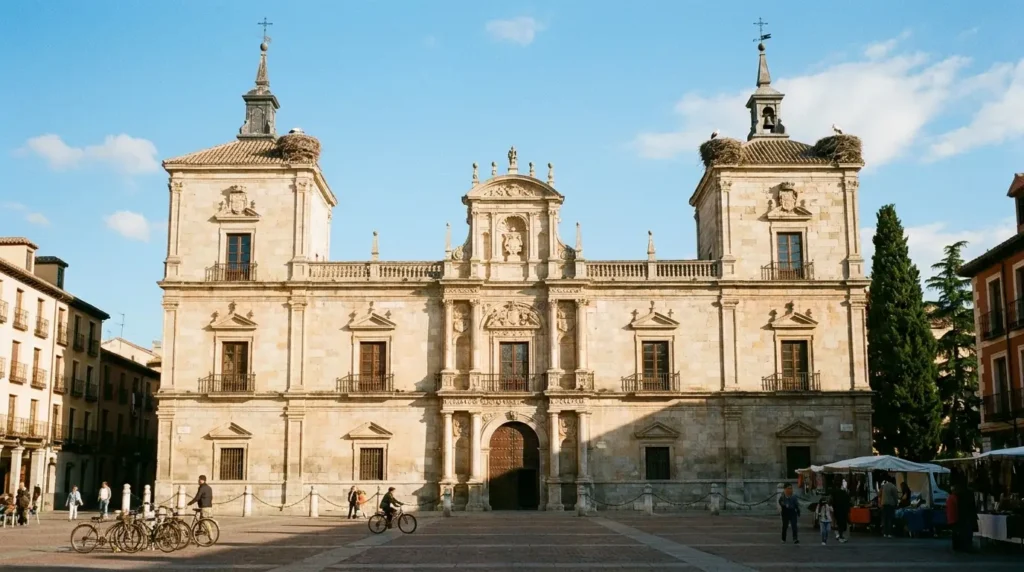
Alcalá de Henares is one of the easiest cultural excursions to organize from Madrid. It is located about 30 kilometers from the capital and has a direct connection by Cercanías (commuter rail). In one day you can visit the University, the Plaza de Cervantes, Cervantes' Birthplace, Calle Mayor, the Corral de Comedias (open-air theater) and the Magistral Cathedral.Tourism in Alcalá de Henares)
Alcalá is not only the birthplace of Miguel de Cervantes. Its historic center also allows visitors to explore different periods of history: the ancient Roman Complutum, the medieval town, the coexistence of religious communities, and the urban transformation spurred by the founding of the University.
Furthermore, UNESCO included the University and the historic center of Alcalá de Henares on the World Heritage List for its status as the first planned university city and for the influence it exerted as a model for other university cities in Europe and America.UNESCO World Heritage Centre)
Due to its proximity, it can easily be visited on a day trip from Madrid. Even so, it's advisable to plan your day in advance: some monuments require guided tours, have specific opening hours, or are closed on certain days.
Is it possible to visit Alcalá de Henares in one day?
Yes. A day trip allows you to explore the historic center, visit two or three monuments, and stop for lunch without having to rush.
Additionally, a first visit may include:
- University of Alcalá.
- Cervantes Square.
- Corral de Comedias.
- Main street.
- Cervantes Birthplace Museum.
- Antezana Hospital.
- Magistral Cathedral.
- Archbishop's Palace.
- Walled enclosure and Madrid Gate.
- Some space related to the ancient Roman city of Complutum.
To complete this route at a leisurely pace, it is advisable to spend between six and eight hours in Alcalá.
If you only have half a day, it is preferable to concentrate on the University, the Plaza de Cervantes, Calle Mayor, the Cervantes Birthplace and the Cathedral.
How to get from Madrid to Alcalá de Henares?
In fact, the main options are:
1. Surroundings.
2. Intercity bus.
3. Car.
4. Organized excursion or private tour.
On the other hand, the best alternative will depend on the starting point, the number of travelers, and the need to adapt the schedule.
From Madrid to Alcalá de Henares by commuter train
The Cercanías commuter train is one of the most practical options because the Alcalá de Henares station is within walking distance of the historic center.
Furthermore, the station currently receives services from lines C-2, C-7, and C-8. Timetables and any potential disruptions should be checked for the exact date of travel, especially as railway works may temporarily alter the service.Renfe)
Depending on the departure station and service, the journey from the center of Madrid usually takes approximately 35 to 50 minutes. The time should be checked on the official Renfe travel planner before departure.Renfe)
Advantages of the commuter rail
- Direct connection from different stations in Madrid.
- It does not depend on road traffic.
- It allows you to return until late in the afternoon.
- The station is close to the center.
- It doesn't require you to look for parking.
- It is practical for individual travelers, couples, and small groups.
What you should check
- Departure station.
- Corresponding line.
- Possible transfers.
- Time of the last train back.
- Works or incidents.
- Station accessibility.
- Valid ticket or pass type.
From the Alcalá de Henares station you can walk to the Plaza de Cervantes in about fifteen minutes, depending on your pace.
From Madrid to Alcalá de Henares by bus
Intercity buses offer another alternative, especially for those staying near the Avenida de América interchange.
Travel time depends on traffic, time of day, and the number of stops. Under normal conditions, it usually takes around one hour, although it can increase during peak hours.
Advantages of the bus
- Exit from Avenida de América.
- Different frequencies.
- It may be practical depending on the accommodation.
- It allows you to reach different areas of Alcalá.
- It does not require traveling to a train station.
Disadvantages
- Traffic can increase the duration.
- Not all services make the same stops.
- The arrival point may not be so intuitive for a first visit.
- It is advisable to confirm the exact line and stop.
Schedules and routes should be checked with the Madrid Regional Transport Consortium before traveling.
From Madrid to Alcalá de Henares by car
Alcalá is connected to Madrid by the A-2 and the R-2 toll motorway. Alcalá Tourism indicates different exits to access the historic center and other areas of the city.Tourism in Alcalá de Henares)
A car can be convenient when:
- Several people are traveling.
- More flexibility is needed.
- Young children participate.
- There are mobility needs.
- We want to visit Complutum or more distant areas.
- The excursion is combined with another destination.
Likewise, it is not advisable to try to drive through the historic center.
In addition, the Alcalá City Council and Tourism Office offer specific information on parking, distances, and routes from parking areas to the old town.Tourism in Alcalá de Henares)
From Madrid to Alcalá on an organized excursion
In fact, an organized tour may include:
- Departure from Madrid.
- Transport.
- Guided tour.
- Entrance to certain monuments.
- Leisure.
- I'm returning to Madrid.
- Adaptation for families or groups.
Before booking, it's advisable to check:
- How many hours are actually spent in Alcalá?.
- Which buildings can be visited inside?.
- If the University is included.
- If you enter the Corral de Comedias.
- If Cervantes' Birthplace is open that day.
- Group size.
- Language.
- Ticket prices.
- Time for lunch.
- Return point in Madrid.
A private tour can be especially useful for combining the historic center with Complutum or for adapting the tour to a literary, university or family interest.
What to see in Alcalá de Henares in one day
1. Cervantes Square
On the other hand, the Plaza de Cervantes is a suitable starting point for a tour of the city center.
It occupies the space of the old market square and serves as a connection between the university area and the old medieval village.
Furthermore, it contains or includes:
- Statue of Miguel de Cervantes.
- Bandstand.
- City hall.
- Tower of Santa María.
- Chapel of the Oidor.
- Access to the Corral de Comedias.
- Start of Main Street.
- Connection with the University.
The square is long and allows you to orient yourself before starting the route.
It also offers a good opportunity to explain that Alcalá developed from two related areas: the old town and the university city planned around the Colegio Mayor de San Ildefonso.
2. Chapel of the Oidor and remains of Santa María
Also, at one end of the Plaza de Cervantes are the Chapel of the Oidor and the Tower of Santa María.
Furthermore, the chapel is linked to the church where Miguel de Cervantes was baptized. While the original building suffered significant damage and is not fully preserved, the space allows us to understand Cervantes' connection to the city.
It is advisable to check the opening hours before organizing your visit, as it also functions as a cultural space and tourist office.
3. University of Alcalá and Colegio Mayor de San Ildefonso
On the other hand, the University is one of the key visits.
It was founded by Cardinal Francisco Jiménez de Cisneros at the end of the 15th century and became the center of a planned university city. Thus, UNESCO considers Alcalá the first model of its kind in the Modern Age.UNESCO World Heritage Centre)
Likewise, the Colegio Mayor de San Ildefonso constitutes the main nucleus of the complex.
What to watch
- Facade of the University Residence Hall.
- Courtyard of Saint Thomas of Villanueva.
- Courtyard of Philosophers.
- Trilingual Courtyard.
- Auditorium.
- Chapel of San Ildefonso.
- Tomb of Cardinal Cisneros.
Furthermore, the Paraninfo was used for academic ceremonies and continues to be associated with solemn University events. Specifically, the University Chapel preserves Cisneros's tomb and is part of the buildings directly linked to the founding period.Tourism in Alcalá de Henares)
Is entry free?
It should not be taken for granted.
On the other hand, visits to the interior are organized according to specific schedules and procedures. These must be consulted and booked through the University's official visitor services office.Tourism in Alcalá de Henares)
For a first excursion, it is worth adjusting the day to the time available for this visit.
4. Corral de Comedias
The Corral de Comedias is located in the Plaza de Cervantes and is one of the most interesting historical theater spaces in Spain.
Furthermore, its configuration has evolved from its origin as a corral de comedias to adapt to different theatrical models.
The visit also allows one to understand:
- How the audience was organized.
- What function did the courtyards and galleries have?.
- How performance spaces evolved.
- What importance did theatre have during the Golden Age?.
- How the building transformed over time.
Visits take place at specific times and also depend on the theater schedule. Alcalá Tourism recommends checking prices, schedules and availability before visiting.Tourism in Alcalá de Henares)
If the trip has a literary focus, this stop should be one of the priorities.
5. Main Street
In addition, Calle Mayor connects Plaza de Cervantes with the area of the Magistral Cathedral.
It is one of the most recognizable axes of the historic center and stands out for its arcades.
In fact, for centuries it was linked to the old Jewish quarter and the commercial activity of the city.
Currently, it concentrates:
- Shops.
- Restaurants.
- Pastry shops.
- Historic buildings.
- Access to courtyards.
- Cervantes' Birthplace.
- Antezana Hospital.
- Sculptures of Don Quixote and Sancho Panza.
More than just a thoroughfare, it should be explored while observing its columns, facades, and narrow side entrances.
6. Cervantes Birthplace Museum
On the other hand, the Cervantes Birthplace Museum is located on Calle Mayor.
Furthermore, the museum occupies the site that researcher Luis Astrana Marín identified as Miguel de Cervantes' family home and recreates different domestic spaces from the 16th and 17th centuries.Cervantes Birthplace Museum)
The visit also allows you to get closer to:
- Everyday life.
- Furniture.
- Kitchen.
- Family stays.
- Domestic chores.
- Cervantes editions.
- Later interpretation of the figure of Cervantes.
Furthermore, it is important to explain that this is a museum reconstruction, not a house preserved exactly as it was during the writer's childhood.
Current schedules
In July 2026, the museum published this schedule:
- Tuesday to Friday (working days): 10:00 to 18:00.
- Saturdays, Sundays and public holidays: from 10:00 to 19:00.
- Closed on Mondays and certain public holidays.
- Last entry thirty minutes before closing time.Cervantes Birthplace Museum)
These times should be double-checked before posting or visiting.
How much time do you need?
In fact, between thirty and forty-five minutes is usually enough, depending on the number of people.
There may be a wait on weekends, as the interior space is limited.
7. Antezana Hospital
Next to Cervantes' Birthplace is the Antezana Hospital.
It is a historic institution linked to assistance and hospitality. It is also traditionally associated with the Cervantes family and with Saint Ignatius of Loyola.
The interior visit should be checked in advance, as it may be subject to specific times and conditions.
Even if you don't go inside, it's worth observing its facade and its location within Calle Mayor.
8. Magistral Cathedral of Saints Justus and Pastor
On the other hand, the Magistral Cathedral is located in the core that functioned as the religious, political and social center of the medieval town.
Furthermore, the building is linked to the tradition of the martyrdom of Saints Justus and Pastor. Thus, its location structured a good part of the medieval layout of Alcalá.Tourism in Alcalá de Henares)
What to observe
- Facade.
- Renaissance tower.
- Nave.
- Crypt.
- Cloister.
- Interpretation center.
- Relationship with the Plaza de los Santos Niños.
- Layout of nearby streets.
In addition, the tower offers a panoramic view of the historic center, but access depends on schedules and visiting options.Tourism in Alcalá de Henares)
As it is an active temple, religious celebrations may affect cultural visits.
9. Archbishop's Palace
In fact, the Archbishop's Palace is located near the Cathedral and the walled enclosure.
It had an important political and religious function and is linked to various events in the history of Castile and the monarchy.
Although not all areas are open to visitors, the exterior allows us to talk about:
- Power of the archbishops of Toledo.
- Relationship with the Crown.
- Historical stays of real people.
- Evolution of the set.
- Fires and property losses.
On the other hand, from this area you can continue towards the walled enclosure and the Madrid Gate.
10. Walled enclosure and Madrid Gate
Furthermore, the Puerta de Madrid marks one of the old entrances to Alcalá.
The name is also explained by its orientation towards the road that connected to Madrid. Interestingly, the capital has a Puerta de Alcalá that served the opposite purpose.
Furthermore, the site preserves sections of wall and towers. Alcalá Tourism publishes information about visits to some sectors and interpretive spaces.Tourism in Alcalá de Henares)
This is a particularly useful stop for understanding the difference between:
- Medieval village.
- Religious and political precinct.
- University expansion.
- Modern city.
11. Monastery of San Bernardo
The Monastery of San Bernardo, known as the Bernardas, is located next to the Archbishop's Palace.
Its church features a particularly striking floor plan and dome.
It can also be added to the route if the schedules coincide, but it is not advisable to guarantee access without first checking the tourist and religious information.
12. Archaeological and Paleontological Museum of the Community of Madrid
On the other hand, this museum allows you to learn about the historical evolution of the territory from Prehistory to more recent stages.
It is also a good option for:
- Rainy days.
- Travelers interested in archaeology.
- Families with older children.
- People who want to understand Complutum before visiting the site.
- Stays of more than one day.
On a basic excursion it can replace another indoor activity, but it shouldn't be automatically added to an already busy day.
13. Roman city of Complutum
Complutum was an important Roman city and constitutes the historical origin of Alcalá de Henares.
Furthermore, the archaeological site is not located within the main pedestrian route of the historic center. Therefore, including it requires more time or some form of transportation.
It can be combined with:
- House of Hippolytus.
- Archaeological Museum.
- Roman route.
- Specialized visit.
Alcalá's tourism includes Complutum and the House of Hippolytus among its main museums and monuments.Tourism in Alcalá de Henares)
For a first day trip, you have to choose between delving deeper into the Roman city or spending more time at the University and the Cervantes center.
Recommended route through Alcalá de Henares in one day
9:00 — Departure from Madrid
In fact, the time will depend on the train or transport chosen.
It is also advisable to arrive in Alcalá between 9:45 and 10:00.
10:00 — Plaza de Cervantes
First orientation and exterior tour.
10:20 — University of Alcalá
Guided tour of the Colegio Mayor de San Ildefonso, adjusted to the reserved time.
11:30 — Corral de Comedias
Check if compatible availability exists.
If that's not possible, you can observe the outside and continue.
12:00 — Main Street
Walk through the arcades and explanation of the old commercial area.
12:20 — Cervantes' Birthplace
Visit of approximately thirty or forty minutes.
13:00 — Antezana Hospital
Exterior or brief visit, depending on availability.
13:30 — Magistral Cathedral
Visit to the temple and the surroundings of the Plaza de los Santos Niños.
14:15 — Food
A break of one hour or one and a half hours.
15:45 — Archbishop's Palace and Bernardas
Exterior tour and visit when the schedule allows.
16:30 — Walls and Gate of Madrid
A stroll through the historic center.
17:15 — Archaeological Museum or free time
Choose between an additional cultural visit, returning to Plaza de Cervantes, or stopping at a pastry shop.
18:30 — Return to the station
Likewise, it's advisable to arrive with plenty of time to spare.
7:00 PM — Train back to Madrid
The schedule should be checked before starting the workday.
What to choose if you only have half a day
Prioritize:
1. Cervantes Square.
2. University.
3. Main Street.
4. Cervantes' Birthplace.
5. Magistral Cathedral.
6. Exterior of the Archbishop's Palace.
Don't try to fit Complutum, the archaeological museum and the Corral de Comedias into a visit of just a few hours.
Which tickets should you book?
University of Alcalá
It must be one of the first reservations because the interiors are visited at organized times.
The visit should include, where the format allows:
- Courtyards.
- Auditorium.
- Chapel of San Ildefonso.
- Information about Cisneros.
- History of the University.
Corral de Comedias
Furthermore, visits depend on schedules and programming. It is also advisable to book in advance if it is a literary or theatrical priority.Tourism in Alcalá de Henares)
Cervantes' Birthplace
Furthermore, admission and conditions should be checked on the official website. In fact, the museum is closed on Mondays and certain public holidays.Cervantes Birthplace Museum)
Magistral Cathedral
Opening times may vary depending on the day, religious services, and access to the tower.Tourism in Alcalá de Henares)
Where to eat in Alcalá de Henares?
On the other hand, the historic center offers numerous options around:
- Main street.
- Cervantes Square.
- Libreros Street.
- Plaza de los Santos Niños.
- Streets near the University.
Furthermore, among the products and preparations linked to the area you can find:
- Castilian cuisine.
- Crumbs.
- Stews.
- Barbecues.
- Tapas.
- Convent sweets.
- Costrada de Alcalá.
- Doughnuts.
- Candied almonds.
The costrada is one of the city's most famous sweets and can serve as a gastronomic finale to the excursion.
Specific restaurant recommendations should be reviewed frequently because prices, hours, and businesses change.
Alcalá de Henares with children
The city is easy to explore as a family because the center has large pedestrian areas and the distances between the main stops are reasonable.
Similarly, with children it is advisable to reduce the number of indoor spaces and use themes that allow for participation:
- How Cervantes lived.
- Differences between an old house and a modern one.
- Don Quixote and Sancho.
- Student life.
- Golden Age Theatre.
- Storks on buildings.
- Walls and gates.
- Roman remains.
Additionally, a family route might include:
1. Cervantes Square.
2. University abroad.
3. Main Street.
4. Cervantes' Birthplace.
5. Exterior of the Cathedral.
6. Walls.
7. Break to eat or snack.
In fact, it is not advisable to combine a long visit to the University, the Corral, the archaeological museum and Complutum on the same day with small children.
Is Alcalá de Henares accessible?
On the other hand, the historic center has pedestrian zones and Alcalá Tourism publishes routes and specific information on accessibility.Tourism in Alcalá de Henares)
Even so, the conditions of each historic building must be checked.
There may be:
- Steps.
- Uneven pavements.
- Courtyards.
- Limited access.
- Towers without complete adaptation.
- prolonged standing.
- Streets with limited traffic, but not entirely pedestrianized.
Before booking a visit, please indicate:
- Use of a wheelchair.
- Difficulty walking.
- Need to sit down.
- Participation of older people.
- Use of cart.
- Visual or auditory needs.
What to bring on the excursion
- Comfortable shoes.
- Water.
- Sun protection.
- Tickets downloaded.
- Tickets or reservations.
- Sufficient battery.
- Map.
- A garment for entering temples.
- Umbrella or raincoat depending on the weather.
- Room for return.
On the other hand, the route does not have the steep hills of Toledo, but it involves several hours of walking and standing.
Common mistakes when visiting Alcalá from Madrid
To think that everything revolves around Cervantes
Cervantes is fundamental, but the city also stands out for its university, its urban layout, Roman history, theater and religious heritage.
Do not reserve the University
Similarly, it can prevent access to some of the most interesting spaces.
Go on a Monday without checking closing times
In addition, Cervantes' Birthplace is closed on Mondays and other monuments may have different schedules.Cervantes Birthplace Museum)
Trying to include Complutum without arranging transport
In fact, the site is outside the main pedestrian area.
Spending too much time indoors
On the other hand, on a day trip it is advisable to select two or three priority visits.
Do not check the commuter rail service
Furthermore, roadworks and incidents may modify routes and times.Renfe)
Arriving late for a booked visit
Likewise, the University and the Corral operate on specific schedules.
Walking down Calle Mayor without noticing the buildings
The arcades, courtyards and side entrances are all part of the experience.
Presenting the Birthplace as an intact dwelling
Furthermore, the space is a museum recreation located on the site identified as Cervantes' family home.Cervantes Birthplace Museum)
Is it worth visiting Alcalá with a guide?
Yes, especially when one wants to understand the relationship between the medieval city, Cisneros' university project, and the figure of Cervantes.
In fact, a guided tour can explain:
- Why was the University founded?.
- How the university city was organized.
- What function did schools serve?.
- How the students lived.
- What was Cervantes' relationship with Alcalá?.
- How a corral de comedias worked.
- What remains of the old Jewish quarter?.
- How the Roman city developed.
- Which buildings are original and which have been transformed?.
Alcalá offers daily municipal tours and themed tours on weekends. The official offerings also include private, theatrical, and specialized options.Tourism in Alcalá de Henares)
Shared visit
It may also be suitable if:
- Are you traveling alone or as a couple?.
- You're looking for a general introduction.
- You can adapt to a set schedule.
- You don't need to modify the route.
Private tour
Similarly, it can add more value if:
- You are traveling as a family.
- You are part of a group.
- Do you want to leave Madrid with someone?.
- You're looking for a literary approach.
- You want to include University and Corral.
- You need to adjust the duration.
- Do you want to incorporate Complutum?.
- There are mobility needs.
- You have little time.
From Madrid to Alcalá de Henares with 4U Madrid
Alcalá can be explored on your own, but a well-organized visit allows you to understand that the city is not only the birthplace of Cervantes.
The University, the theater, the old neighborhoods, the Cathedral and the Roman heritage are all part of a much larger story.
Likewise, at 4U Madrid we can progressively incorporate cultural and private excursions from Madrid, adapted to the number of participants, the time available and the interests of the group.
In addition, the experience could include:
- Departure or coordination of transport from Madrid.
- Historical route through Alcalá.
- University.
- Cervantes tour.
- Main street.
- Cervantes' Birthplace.
- Cathedral and medieval enclosure.
- Time for lunch.
- Adaptation for families or groups.
- Extension to Complutum.
Frequently asked questions about Alcalá de Henares
How to get there and how much time you need
In fact, the commuter train journey usually takes approximately 35 to 50 minutes, depending on the departure station and the service. Specifically, timetables and possible transfers should be checked with Renfe for the specific date.Renfe)
On the other hand, Alcalá de Henares station currently receives trains from lines C-2, C-7 and C-8. The service may be affected by works or incidents, so it is advisable to check the official timetable before leaving.Renfe)
Yes. A day trip allows you to see the University, Cervantes Square, Calle Mayor, Cervantes' birthplace, the Cathedral, and part of the historic center. To also visit Complutum, it's best to limit your time spent exploring other interior sites.
The priority stops are the University, Plaza de Cervantes, the Corral de Comedias, Calle Mayor, the Cervantes Birthplace and the Magistral Cathedral.
What to visit, opening hours and meals
Likewise, entry conditions should be checked on the museum's official website. Furthermore, the space maintains different opening hours between weekdays and weekends and remains closed on Mondays and certain public holidays.Cervantes Birthplace Museum)
It is highly recommended. In fact, access to spaces such as the Paraninfo and the Chapel of San Ildefonso is organized through visits with specific schedules.Tourism in Alcalá de Henares)
Yes. Specifically, the University and the historic site were inscribed by UNESCO for the value of its planned university town and its subsequent influence.UNESCO World Heritage Centre)
