
If you have three days ahead of you, this guide to Madrid in 3 days It allows you to discover the essentials of the capital without feeling overwhelmed. The city blends history, art, gardens, and street life, and is best enjoyed on foot.
Specifically, the route is organized by zones, so each day it focuses on a specific area, minimizing travel time. Furthermore, all stops are connected by metro, making it easy to adjust your itinerary if you're traveling with children or have limited time.
Madrid in 3 days: the itinerary at a glance
- Day 1 — Habsburg Madrid: Puerta del Sol, Plaza Mayor, Royal Palace, Gran Vía and La Latina.
- Day 2 — Art and Gardens: Paseo del Prado, the three great museums, the Retiro Park, Cibeles and the Literary Quarter.
- Day 3 — The alternative Madrid: Lavapiés or El Rastro, Madrid Río, Matadero, Chamberí and the Temple of Debod.
Each day's tour typically takes between 6 and 8 hours, including stops for lunch. Therefore, it's advisable to book museum and palace tickets in advance.
Day 1: Habsburg Madrid, Sol and Royal Palace
Tomorrow
It begins in the Puerta del Sol, Kilometer zero of Spain's roads. Don't miss the statue of the Bear and the Strawberry Tree, the city's symbol, or the famous Tío Pepe sign. Just a few steps away is the Royal Post Office, where the bells ring every December 31st.
Then, from Sol, walk towards the Plaza Mayor, A jewel of Habsburg architecture. Its arcades and balconies invite you to linger. Continue on to the San Miguel Market, ideal for a bite to eat.
Next, continue along Calle Mayor to Plaza de la Villa, one of the oldest squares in the city, home to the Casa de Cisneros and the Torre de los Lujanes. From there, you'll reach the Almudena Cathedral, whose dome offers panoramic views if you decide to climb it.
Directly opposite, moreover, stands the imposing Royal Palace, One of the largest in Western Europe. You can explore its halls, the armory, and the gardens. Afterward, enjoy the Plaza de Oriente and admire the façade of the Royal Theatre.
Afternoon and evening
At midday, take a break in the area around Plaza de Isabel II (Opera), where you can find everything from fast food to traditional Spanish cuisine.
After the break, walk along Calle Arenal to Callao and then head onto Gran Vía. Considered Madrid's Broadway, it combines monumental architecture, shops, and theaters. If you want views, go up to the viewpoint of the Circle of Fine Arts or the rooftop of El Corte Inglés in Callao.
Finally, as night falls, enjoy the atmosphere of La Latina, one of Madrid's most traditional neighborhoods. If you'd like to explore this area further, we have a detailed route through Habsburg Madrid.
Day 2: Art Triangle, Retiro Park and Literary Quarter
Tomorrow
It begins in the Paseo del Prado, declared a World Heritage Site by the UNESCO as part of the Prado-Retiro axis. Three world-class museums are concentrated here:
- He Prado Museum, with works by Velázquez, Goya, Bosch, and Rubens. You can read more about his history and its origins as a science cabinet.
- He Thyssen Museum, with art from the Renaissance to Pop Art.
- He Reina Sofía Museum, where Picasso's *Guernica* is located.
However, visiting all three in depth is impossible in a morning, so choose one and spend two to three hours there. On your way to El Retiro Park, admire the Neptune Fountain, the Congress of Deputies building, and the Palace Hotel.
Afternoon and evening
Then, enter the Retiro Park, A green oasis steeped in history. Explore the Great Pond, the Crystal Palace, the Velázquez Palace, and the Fountain of the Fallen Angel, one of the few statues in the world dedicated to the devil.
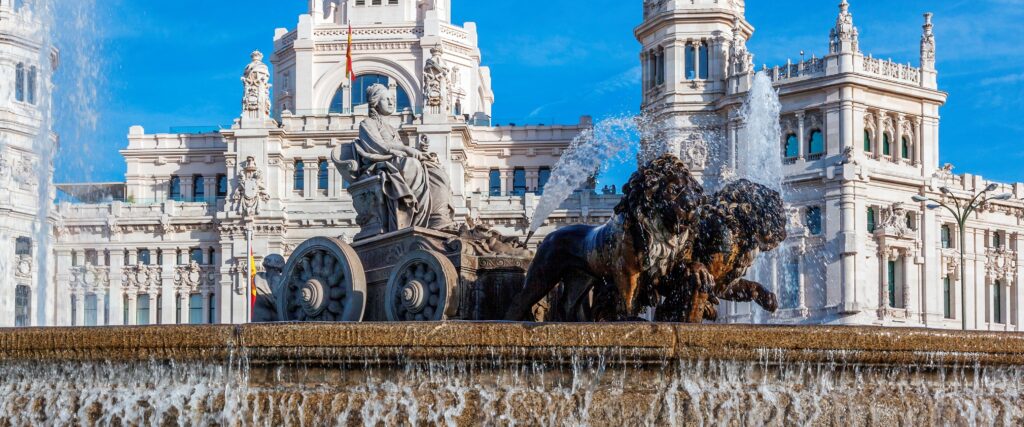
Further along, from the Puerta de Alcalá, a neoclassical symbol of the city, walk along Calle de Alcalá to Cibeles. The fountain, the Cibeles Palace and its viewpoint are highly recommended stops.
Finally, the day ends in the Literary Quarter, where Cervantes, Lope de Vega, and Quevedo lived. Huertas Street guides you on a literary tour, and Santa Ana Square is home to the liveliest terraces.
Day 3: Alternative Madrid, parks and panoramic views
Tomorrow
Dedicate the last day to exploring a less touristy side of Madrid. If it's Sunday, start in the Trail, the most famous flea market in the city. If not, visit Footbath, a multicultural neighborhood with a lot of urban art.
Also nearby is the San Isidro Museum, which tells the story of Madrid from its origins. You can also visit La Tabacalera, a cultural center in a former tobacco factory.
Afternoon and evening
In the afternoon, head to the park of Madrid River, next to the Manzanares River. There you can stroll through miles of green areas, see the Segovia Bridge and visit Matadero Madrid, a cultural center with exhibitions and cinemas.
On the other hand, if you prefer something different, explore Chamberí and its old metro station turned into a museum, or climb to the Moncloa Lighthouse for a complete panoramic view of the city.
Finally, end your visit at the Temple of Debod, A genuine Egyptian temple with one of the best sunsets in Madrid. From there you can walk to the recently renovated Plaza de España and bid farewell to the city in style.
Practical tips for your trip to Madrid in 3 days
- Comfortable shoesThis route involves walking between 8 and 12 kilometers per day.
- Book in advance Tickets for the Royal Palace and museums sell out during peak season.
- Avoid peak hours In summer, from 2:00 PM to 5:00 PM, when the heat is intense.
- Bring a reusable bottleThere are public fountains in El Retiro and Madrid Río.
- Tourist metro passIt's worth it if you're going to make more than three trips a day.
- Museums with free admissionThe Prado, the Reina Sofía, and the Thyssen offer free admission at the end of the day. However, there are queues.
Frequently asked questions about Madrid in 3 days
In short, you can't see everything in Madrid in 3 days, but this tour lets you discover the must-sees and get a real feel for the city. And if you'd like us to tell you what's not in the guidebooks, join us on one of our tours.
Organize your visit to Madrid in 3 days
Yes, to see the essentials: the historic center, the Art Triangle, Retiro Park, and some alternative neighborhoods. Three days in Madrid covers the must-sees, although you'd need a week to include excursions to Toledo or El Escorial.
In total, between 8 and 12 kilometers per day, almost always on flat terrain and in the city center. All stages can be shortened by using the metro, which connects all the stops along the route.
Spring, from April to June, and autumn, from September to November, have mild temperatures. July and August are very hot, while in winter the nights are cold but the museums are less crowded.
Transport and accommodation in Madrid in 3 days
In the areas around Sol, Ópera, or Antón Martín, as you can walk to almost the entire route from there. These are well-connected areas with plenty to do.
There's no need. In fact, the city center is largely pedestrianized and located within a low-emission zone with restricted access. The metro and buses cover the entire route.
Yes, no problem. If you only have one day, stick with day 1; if you have two, add day 2. The third day is the most dispensable if you're short on time.
